How Much Water Should You Really Drink Each Day?
Water is essential for life. Every cell, tissue, and organ in your body depends on it to function properly. From regulating body temperature and transporting nutrients to supporting digestion and removing waste, staying hydrated plays a critical role in overall health. Despite its importance, many people are unsure about how much water they should actually drink each day.
You may have heard the popular advice to drink eight glasses of water daily, but hydration needs vary widely from person to person. Factors such as age, activity level, climate, diet, and overall health all influence how much fluid your body requires. Understanding these factors can help you develop healthy hydration habits that work for your lifestyle.
Why Water Is So Important
Your body is made up of roughly 50% to 70% water, depending on age, sex, and body composition. Water supports numerous vital functions, including:
- Maintaining normal body temperature
- Lubricating joints
- Delivering nutrients and oxygen to cells
- Supporting kidney function and waste removal
- Aiding digestion and preventing constipation
- Keeping skin, eyes, and mouth hydrated
- Helping the brain and muscles perform efficiently
Even mild dehydration can affect concentration, mood, energy levels, and physical performance.
Is the “8 Glasses a Day” Rule Accurate?
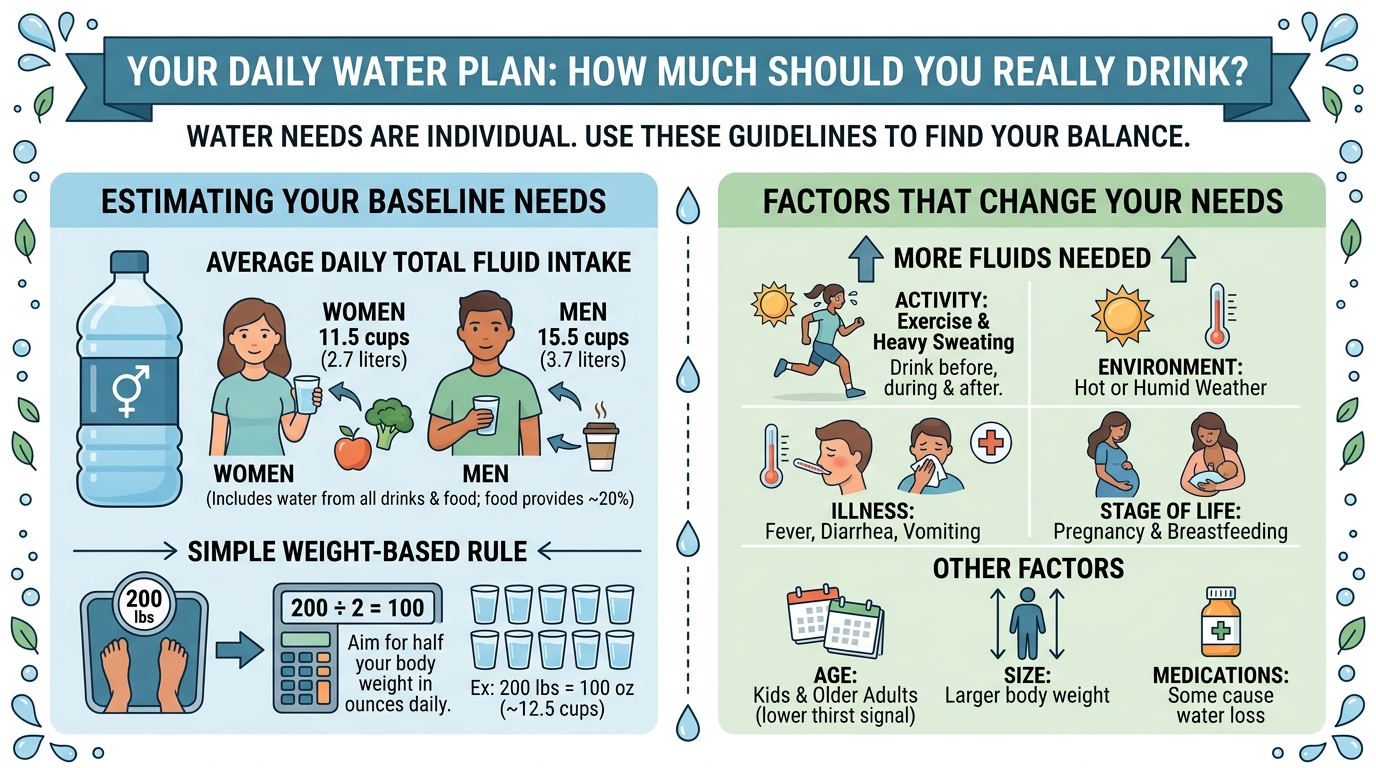
The recommendation to drink eight 8-ounce glasses of water per day—often called the “8×8 rule”—is easy to remember, but it is not a universal requirement. While this amount may be suitable for some individuals, others may need more or less depending on their circumstances.
Many experts suggest focusing on total fluid intake rather than water alone. Fluids come from drinking water, milk, tea, coffee, soups, and water-rich foods such as fruits and vegetables.
General Daily Fluid Recommendations
Although individual needs differ, these general guidelines can serve as a starting point:
- Adult men often need around 3.7 liters (about 125 ounces) of total fluids per day.
- Adult women often need around 2.7 liters (about 91 ounces) of total fluids per day.
- Pregnant and breastfeeding individuals typically require additional fluids to support their bodies and their babies.
These estimates include fluids obtained from both beverages and food.
Factors That Affect Your Water Needs
Physical Activity
Exercise increases fluid loss through sweat. If you engage in intense workouts or spend extended periods outdoors, you may need extra water before, during, and after activity to replace lost fluids.
Climate and Weather
Hot, humid conditions can increase sweating and raise hydration needs. Even in cold weather, people can lose significant amounts of water through breathing and physical activity.
Diet
Foods high in water, such as cucumbers, watermelon, oranges, tomatoes, and lettuce, contribute to hydration. On the other hand, diets high in salt or protein may increase fluid requirements for some people.
Health Conditions
Vomiting, diarrhea, fever, and certain medical conditions can increase fluid losses. Some medications may also affect hydration status. People with specific health concerns should follow guidance from their healthcare provider regarding fluid intake.
Age
Children, older adults, and athletes may have different hydration needs. Older adults, in particular, may not feel thirsty as readily and should pay attention to drinking fluids regularly.
Can You Drink Too Much Water?
While staying hydrated is important, drinking excessive amounts of water in a short period can dilute sodium levels in the blood, leading to a rare but potentially serious condition called water intoxication or hyponatremia.
For most healthy individuals, this is uncommon and usually occurs only when extremely large quantities of water are consumed rapidly. Drinking according to thirst and increasing intake appropriately during prolonged exercise can help maintain balance.
Signs You May Not Be Drinking Enough
Common symptoms of inadequate hydration include:
- Feeling thirsty
- Dark yellow urine
- Dry mouth or lips
- Headaches
- Fatigue or low energy
- Dizziness
- Difficulty concentrating
- Reduced urination
Pale yellow urine is often a practical indicator of good hydration, although certain foods, supplements, and medications can affect urine color.
Easy Ways to Stay Hydrated
Developing healthy hydration habits doesn’t have to be difficult. Consider these practical tips:
- Start your morning with a glass of water.
- Carry a reusable water bottle throughout the day.
- Drink water with meals and snacks.
- Eat water-rich fruits and vegetables regularly.
- Increase fluid intake during exercise or hot weather.
- Flavor water naturally with lemon, cucumber, or berries if plain water feels boring.
- Set reminders if you often forget to drink.
Small, consistent habits are usually more sustainable than trying to drink large amounts all at once.
Do Coffee and Tea Count?
Yes. Coffee and tea contribute to your daily fluid intake despite containing caffeine. While caffeine has a mild diuretic effect, moderate consumption generally provides more fluid than it removes in people who consume it regularly.
Unsweetened beverages can be part of a healthy hydration routine, though water remains an excellent choice because it contains no added sugars or calories.
Hydration From Food
Approximately 20% of many people’s daily fluid intake comes from food. Some excellent water-rich foods include:
- Watermelon
- Strawberries
- Cucumbers
- Celery
- Tomatoes
- Oranges
- Lettuce
- Zucchini
- Soups and broths
Including these foods in your diet can help support hydration while also providing vitamins, minerals, and fiber.
Conclusion
There is no one-size-fits-all answer to how much water you should drink each day. While general recommendations offer useful guidance, your personal needs depend on your activity level, environment, diet, age, and overall health.
The best approach is to drink fluids consistently throughout the day, pay attention to your body’s thirst signals, and adjust your intake when conditions change. By making hydration a regular part of your daily routine, you can support energy levels, digestion, physical performance, and overall well-being for years to come.


Post Comment