15 Superfoods That Support Overall Health
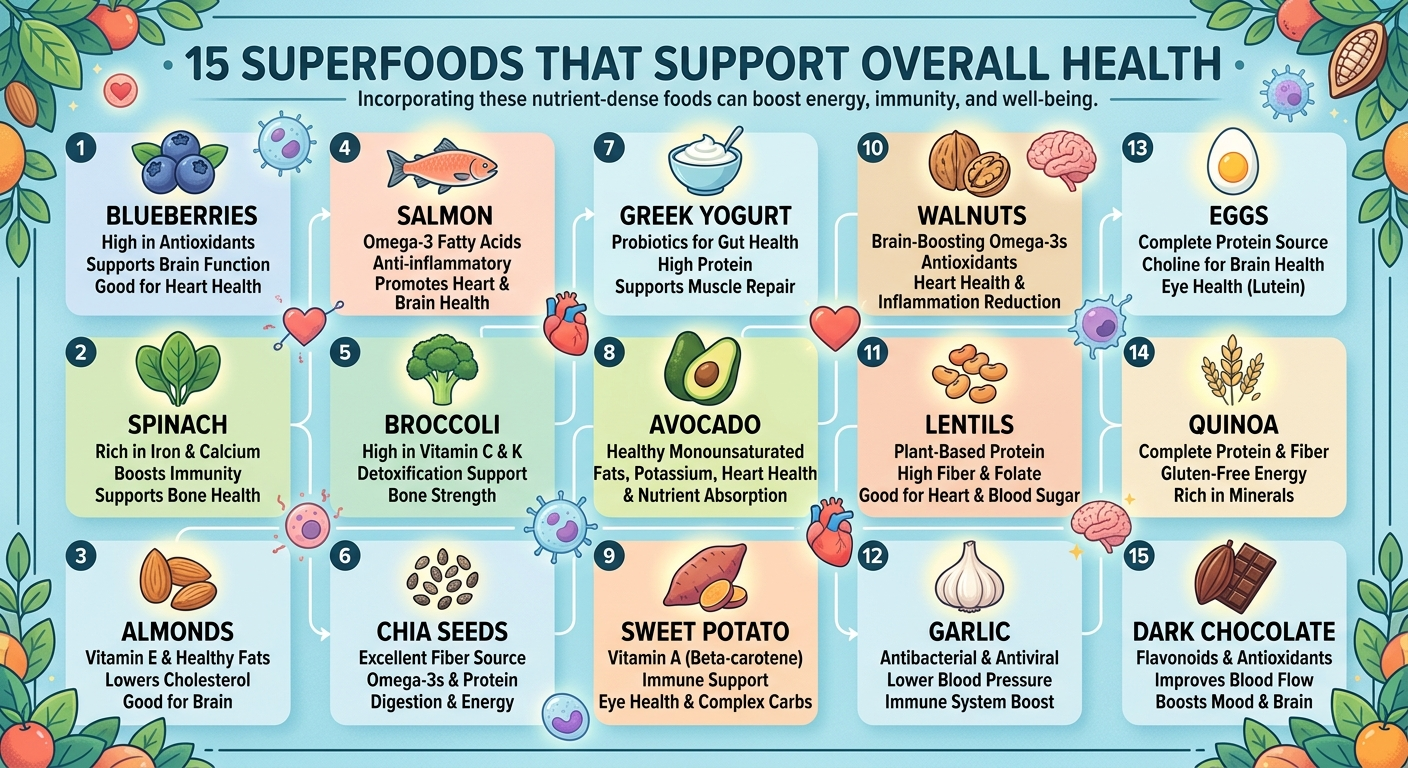
Maintaining good health starts with the foods you eat every day. While no single food can provide every nutrient your body needs, certain nutrient-dense foods—often called superfoods—offer exceptional health benefits. Packed with vitamins, minerals, antioxidants, healthy fats, and fiber, these foods can help support your immune system, improve heart health, boost brain function, and promote overall well-being.
Incorporating a variety of superfoods into your daily meals is a simple and effective way to nourish your body naturally. Here are 15 superfoods that can play an important role in supporting long-term health.
1. Blueberries
Blueberries are rich in antioxidants, particularly anthocyanins, which help protect cells from oxidative stress. They are also an excellent source of vitamin C, vitamin K, and dietary fiber. Regular consumption may support brain health, improve memory, and contribute to cardiovascular wellness.
Add blueberries to smoothies, yogurt, oatmeal, or enjoy them as a healthy snack.
2. Spinach
Spinach is one of the most nutrient-packed leafy greens available. It contains iron, calcium, magnesium, potassium, folate, and vitamins A, C, and K. Its antioxidants help combat inflammation while supporting healthy vision and bone strength.
Fresh spinach works well in salads, soups, omelets, and smoothies.
3. Salmon
Salmon is well known for its high content of omega-3 fatty acids, which are beneficial for heart and brain health. It also provides high-quality protein, vitamin D, and selenium. Eating fatty fish regularly may support healthy cholesterol levels and reduce inflammation.
Grilled, baked, or pan-seared salmon makes a nutritious addition to weekly meal plans.
4. Avocados
Avocados provide heart-healthy monounsaturated fats along with potassium, fiber, and several essential vitamins. Their healthy fats help improve nutrient absorption from other foods while supporting cardiovascular health and satiety.
Spread avocado on whole-grain toast or add slices to salads and sandwiches.
5. Chia Seeds
These tiny seeds are loaded with fiber, plant-based protein, omega-3 fatty acids, and important minerals such as calcium and magnesium. Chia seeds absorb liquid and create a gel-like texture, making them ideal for puddings or smoothies.
They can also be sprinkled over cereal, yogurt, or oatmeal.
6. Greek Yogurt
Greek yogurt contains protein, calcium, and probiotics that help support digestive health. The beneficial bacteria in probiotic-rich foods may contribute to a balanced gut microbiome, which plays an important role in immunity and nutrient absorption.
Choose plain, unsweetened varieties to avoid excess added sugar.
7. Walnuts
Walnuts are packed with healthy fats, antioxidants, and plant compounds that support heart and brain health. They also provide protein and fiber, making them a satisfying snack.
A small handful of walnuts can be enjoyed on its own or mixed into salads and oatmeal.
8. Broccoli
Broccoli is an excellent source of fiber, vitamin C, vitamin K, and compounds that may help support the body’s natural defense systems. It is low in calories yet highly nutritious, making it a valuable addition to balanced diets.
Steamed or roasted broccoli pairs well with many meals.
9. Sweet Potatoes
Rich in beta-carotene, fiber, and potassium, sweet potatoes provide long-lasting energy while supporting eye health and immune function. Their natural sweetness also makes them a healthier alternative to processed side dishes.
Bake or roast them with herbs for a flavorful meal.
10. Oats
Oats are known for their soluble fiber, particularly beta-glucan, which can help maintain healthy cholesterol levels and promote digestive health. They also provide steady energy throughout the morning.
A bowl of oatmeal topped with fruit and nuts creates a nutritious breakfast.
11. Garlic
Garlic has been valued for centuries for both its flavor and potential health-promoting properties. It contains sulfur compounds that may support immune function and cardiovascular health when included as part of a balanced diet.
Fresh garlic enhances soups, sauces, vegetables, and roasted meats.
12. Green Tea
Green tea contains natural antioxidants called catechins, which help protect cells from damage. It may also provide a gentle caffeine boost while supporting metabolism and overall wellness.
Replacing sugary beverages with unsweetened green tea can be a simple healthy habit.
13. Lentils
Lentils are an affordable source of plant-based protein, fiber, iron, and folate. They promote fullness, support digestive health, and contribute important nutrients for overall wellness.
They can be used in soups, curries, salads, and grain bowls.
14. Tomatoes
Tomatoes are rich in vitamin C, potassium, and lycopene, a powerful antioxidant associated with heart and skin health. Cooking tomatoes may increase the availability of lycopene, making tomato sauces and soups nutritious choices.
Fresh tomatoes also add flavor to salads and sandwiches.
15. Dark Chocolate
High-quality dark chocolate with a high cocoa content contains antioxidants known as flavonoids. When consumed in moderation, it may support cardiovascular health and provide a satisfying alternative to highly processed desserts.
Choose varieties with at least 70% cocoa and enjoy small portions.
Tips for Including Superfoods in Your Diet
Adding superfoods doesn’t require a complete diet overhaul. Start by making gradual changes:
- Include berries or oats in your breakfast.
- Add leafy greens to sandwiches and smoothies.
- Replace processed snacks with nuts or Greek yogurt.
- Eat fish such as salmon once or twice a week.
- Use beans or lentils in soups and stews.
- Drink unsweetened green tea instead of sugary beverages.
- Incorporate colorful vegetables into lunch and dinner.
Remember that overall dietary patterns matter more than any single ingredient. Combining a variety of nutrient-rich foods provides the broadest range of health benefits.
Conclusion
Superfoods offer an easy and delicious way to improve your nutritional intake and support overall health. Foods such as blueberries, spinach, salmon, walnuts, oats, lentils, and broccoli provide valuable vitamins, minerals, healthy fats, and antioxidants that help your body function at its best.
Rather than relying on supplements or fad diets, focus on eating a balanced, diverse diet filled with whole foods. By consistently incorporating these 15 superfoods into your meals, you can build healthy habits that contribute to better energy, stronger immunity, improved heart health, and long-term wellness.


Post Comment