10 Daily Habits That Can Improve Your Health Naturally
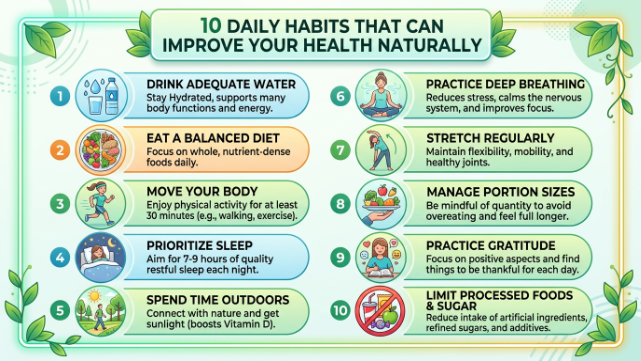
Maintaining good health does not always require expensive treatments, complicated diets, or intense workout routines. In fact, some of the most effective ways to improve your overall well-being come from simple daily habits. By making small but consistent changes to your lifestyle, you can boost your energy levels, strengthen your immune system, support mental health, and reduce the risk of chronic diseases.
In this article, we will explore ten daily habits that can improve your health naturally and help you live a healthier, more balanced life.
1. Start Your Day with a Glass of Water
After several hours of sleep, your body wakes up dehydrated. Drinking a glass of water first thing in the morning helps rehydrate your body, supports digestion, and kick-starts your metabolism.
Water plays a crucial role in regulating body temperature, transporting nutrients, and removing waste products. Staying hydrated throughout the day can also improve concentration and energy levels.
Tip:
Aim to drink at least 8–10 glasses of water daily, depending on your activity level and climate.
2. Eat a Balanced and Nutritious Breakfast
Breakfast is often called the most important meal of the day because it provides the energy needed to start your morning productively. A healthy breakfast should include protein, healthy fats, fiber, and essential vitamins.
Examples include:
- Oatmeal with fruits
- Whole-grain toast with eggs
- Greek yogurt with nuts and berries
A balanced breakfast can help stabilize blood sugar levels and reduce unhealthy snacking later in the day.
3. Stay Physically Active
Regular physical activity is one of the most effective ways to maintain good health naturally. Exercise helps improve cardiovascular health, strengthen muscles and bones, and support mental well-being.
You don’t need a gym membership to stay active. Simple activities such as walking, cycling, stretching, or home workouts can provide significant health benefits.
Recommendation:
Try to get at least 30 minutes of moderate physical activity most days of the week.
4. Eat More Fruits and Vegetables
Fruits and vegetables are rich in vitamins, minerals, antioxidants, and dietary fiber. These nutrients support the immune system and help protect the body from various illnesses.
Colorful fruits and vegetables such as berries, oranges, spinach, carrots, and broccoli provide a wide range of health benefits.
Tip:
Fill at least half of your plate with fruits and vegetables during meals.
5. Prioritize Quality Sleep
Sleep is essential for physical recovery, brain function, and emotional well-being. Poor sleep can increase stress levels, weaken the immune system, and negatively affect overall health.
Adults generally need between 7 and 9 hours of quality sleep each night.
Healthy Sleep Habits:
- Maintain a consistent sleep schedule
- Avoid screens before bedtime
- Keep your bedroom cool and comfortable
- Limit caffeine in the evening
6. Manage Stress Effectively
Chronic stress can have serious effects on both mental and physical health. It may contribute to high blood pressure, anxiety, depression, and weakened immunity.
Finding healthy ways to manage stress can significantly improve your quality of life.
Stress-Reduction Techniques:
- Deep breathing exercises
- Meditation
- Reading
- Spending time in nature
- Listening to relaxing music
Even a few minutes of relaxation each day can make a noticeable difference.
7. Limit Processed Foods
Processed foods often contain high amounts of added sugars, unhealthy fats, and excess sodium. Regular consumption can increase the risk of obesity, diabetes, and heart disease.
Instead, focus on whole foods such as:
- Fresh fruits
- Vegetables
- Whole grains
- Lean proteins
- Healthy fats
Making healthier food choices consistently can have a positive impact on long-term health.
8. Practice Good Hygiene
Good hygiene habits help prevent infections and promote overall wellness. Simple practices like washing your hands regularly and maintaining oral hygiene can reduce the spread of germs.
Essential Hygiene Habits:
- Wash hands before meals
- Brush teeth twice daily
- Shower regularly
- Keep living spaces clean
These small actions can play a major role in protecting your health.
9. Spend Time Outdoors
Exposure to natural sunlight helps the body produce vitamin D, which is important for bone health and immune function. Spending time outdoors can also reduce stress and improve mood.
Whether it’s a short walk in the park or gardening in your backyard, outdoor activities can provide both physical and mental health benefits.
Tip:
Aim for at least 15–30 minutes of sunlight exposure several times a week, while taking appropriate sun protection measures.
10. Maintain Positive Social Connections
Healthy relationships contribute significantly to emotional well-being. Spending time with family and friends can reduce feelings of loneliness, improve mental health, and provide emotional support during difficult times.
Strong social connections have been linked to better overall health and even longer life expectancy.
Ways to Stay Connected:
- Call family members regularly
- Meet friends for activities
- Join community groups
- Participate in volunteer work
Positive relationships can help create a healthier and happier life.
Conclusion
Improving your health naturally does not require dramatic lifestyle changes. By adopting simple daily habits such as drinking more water, eating nutritious foods, exercising regularly, getting enough sleep, and managing stress, you can make a significant difference in your overall well-being.
The key to long-term success is consistency. Start with one or two habits and gradually incorporate the others into your daily routine. Over time, these healthy choices can lead to increased energy, better mental health, a stronger immune system, and a higher quality of life.
Remember, small daily actions often produce the biggest results when practiced consistently.



Post Comment