Common Health Myths You Should Stop Believing
Health information is everywhere. From social media posts and online articles to advice from friends and family, people are constantly exposed to tips about staying healthy. While some of this information is based on scientific evidence, many health beliefs are actually myths that have been repeated for years without proper proof.
Believing health myths can lead to poor lifestyle choices, unnecessary worry, and even harmful habits. Understanding the difference between facts and misconceptions is essential for making informed decisions about your well-being.
In this article, we will explore some of the most common health myths you should stop believing and uncover the facts behind them.
Why Health Myths Spread So Easily
Health myths often spread because they sound logical, are easy to remember, or have been passed down through generations. The rise of social media has made it even easier for misinformation to reach millions of people within a short period.
Some common reasons health myths persist include:
- Lack of scientific knowledge
- Misinterpretation of research
- Personal anecdotes being treated as facts
- Viral social media content
- Outdated medical beliefs
Learning to question health claims and seek reliable information can help you avoid falling for misinformation.
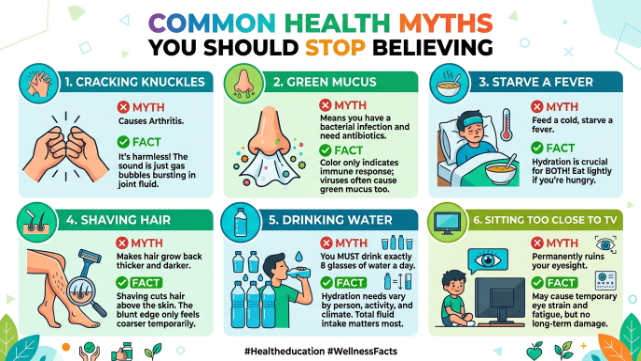
Myth 1: You Need to Drink Exactly Eight Glasses of Water Every Day
One of the most widely repeated health myths is that everyone must drink exactly eight glasses of water daily.
The Truth
Hydration needs vary depending on factors such as:
- Age
- Body size
- Physical activity
- Climate
- Overall health
While drinking water is important, there is no universal requirement that fits everyone. Many people also obtain fluids from foods, fruits, vegetables, tea, and other beverages.
The best approach is to drink when you feel thirsty and ensure your urine remains light in color, which is often a sign of adequate hydration.
Myth 2: Eating Fat Makes You Fat
For many years, dietary fat was blamed for weight gain and poor health.
The Truth
Not all fats are harmful. In fact, healthy fats are essential for:
- Brain function
- Hormone production
- Nutrient absorption
- Heart health
Healthy sources of fat include:
- Avocados
- Nuts
- Seeds
- Olive oil
- Fatty fish
Weight gain occurs when you consistently consume more calories than your body burns, regardless of whether those calories come from fats, carbohydrates, or proteins.
Myth 3: Cracking Your Knuckles Causes Arthritis
Many people have been warned that cracking their knuckles will eventually lead to arthritis.
The Truth
Research has found no convincing evidence that cracking your knuckles causes arthritis.
The popping sound occurs when gas bubbles in joint fluid collapse or shift. While frequent knuckle cracking may annoy people around you, it is not known to increase the risk of arthritis.
However, excessive force or repetitive joint manipulation could potentially cause temporary discomfort in some individuals.
Myth 4: You Only Need Sunscreen on Sunny Days
Many people skip sunscreen when the weather is cloudy.
The Truth
Ultraviolet (UV) rays can penetrate clouds and still reach your skin.
Even on overcast days, UV exposure can contribute to:
- Sunburn
- Premature skin aging
- Increased risk of skin cancer
Wearing sunscreen regularly is an important part of protecting your skin throughout the year.
Myth 5: Detox Diets Cleanse Your Body
Detox diets and cleansing products are often marketed as ways to remove toxins from the body.
The Truth
Your body already has highly effective detoxification systems.
The liver, kidneys, lungs, and digestive system naturally remove waste products and toxins.
Most detox products lack strong scientific evidence and may offer little benefit beyond temporary water weight loss.
A healthy diet, adequate hydration, regular exercise, and sufficient sleep are far more effective ways to support your body’s natural processes.
Myth 6: You Must Exercise Every Day to Be Healthy
Some people believe missing a workout means they are failing their fitness goals.
The Truth
Rest and recovery are important components of a healthy lifestyle.
While regular physical activity is beneficial, your body also needs time to repair and recover.
Most health experts recommend:
- At least 150 minutes of moderate exercise per week
- Strength training activities at least twice weekly
Consistency matters more than exercising every single day.
Myth 7: Natural Products Are Always Safe
Many people assume that products labeled as “natural” are automatically healthy and safe.
The Truth
Natural does not always mean harmless.
Certain natural substances can:
- Cause allergic reactions
- Interact with medications
- Produce side effects
- Be harmful in large amounts
Always evaluate products based on scientific evidence rather than marketing claims alone.
Myth 8: Cold Weather Causes Colds
A common belief is that being outside in cold weather directly causes colds.
The Truth
Colds are caused by viruses, not low temperatures.
However, colder months often lead to:
- More time spent indoors
- Increased close contact with others
- Greater opportunities for viruses to spread
Cold weather itself does not create viral infections, although it may contribute indirectly to transmission patterns.
Myth 9: You Can Sweat Out Toxins
Many fitness trends suggest that sweating removes harmful toxins from the body.
The Truth
Sweating primarily helps regulate body temperature.
While small amounts of certain substances can be excreted through sweat, the body’s main detoxification organs remain the liver and kidneys.
Sweating during exercise is beneficial for fitness and cardiovascular health, but it is not a major detoxification method.
Myth 10: More Vitamins Always Mean Better Health
Some people assume taking large amounts of vitamins will automatically improve health.
The Truth
Vitamins are essential, but more is not always better.
Excessive supplementation may lead to:
- Toxicity
- Digestive problems
- Interactions with medications
The best source of nutrients is generally a balanced diet rich in fruits, vegetables, whole grains, and lean proteins.
Supplements should be used when necessary and ideally under professional guidance.
Myth 11: Skipping Meals Helps You Lose Weight
Many individuals skip meals in an effort to reduce calorie intake.
The Truth
Skipping meals may cause:
- Increased hunger later in the day
- Overeating
- Low energy levels
- Reduced concentration
Sustainable weight management is usually achieved through balanced eating habits rather than extreme restriction.
Regular, nutritious meals can help support healthy metabolism and appetite control.
Myth 12: Healthy People Never Get Sick
Some people believe that individuals who exercise regularly and eat healthy foods never become ill.
The Truth
Even the healthiest people can catch infections or develop medical conditions.
Healthy habits reduce risk and support overall well-being, but they do not guarantee perfect health.
Factors such as genetics, environmental exposures, and age also influence health outcomes.
The goal of healthy living is risk reduction, not complete immunity from illness.
How to Identify Reliable Health Information
To avoid health myths and misinformation:
Check Credible Sources
Look for information from:
- Government health agencies
- Reputable medical organizations
- Qualified healthcare professionals
- Peer-reviewed research
Be Skeptical of Extreme Claims
Statements such as:
- “Miracle cure”
- “Guaranteed results”
- “Instant weight loss”
often lack scientific support.
Consult Healthcare Professionals
If you have concerns about your health, seek advice from qualified medical experts rather than relying solely on social media or anecdotal stories.
Conclusion
Health myths can be misleading, and believing them may prevent people from making informed decisions about their well-being. From misconceptions about hydration and exercise to myths about detox diets and vitamins, many commonly accepted health beliefs are not supported by scientific evidence.
Understanding the facts behind these myths empowers you to make healthier choices and avoid unnecessary confusion. By relying on credible information, practicing evidence-based habits, and consulting healthcare professionals when needed, you can take better control of your health and wellness.
Remember, good health is built on knowledge, consistency, and informed decision-making—not on popular myths or internet rumors.



Post Comment